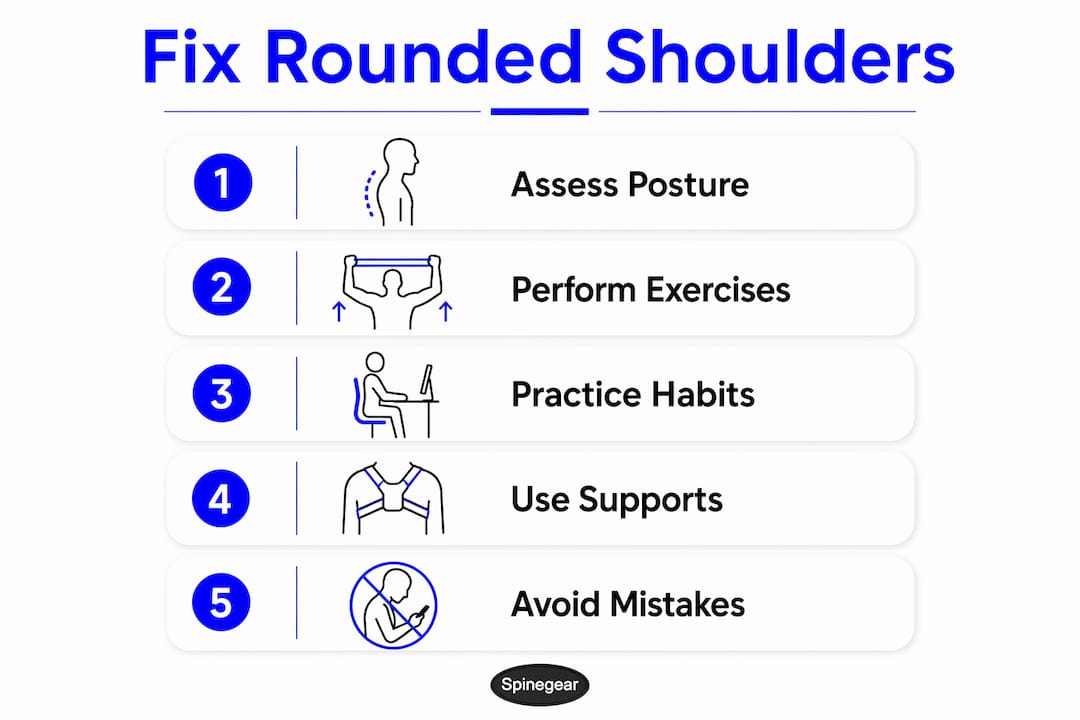
How to fix rounded shoulders: your home guide
How to fix rounded shoulders effectively at home
The most effective approach combines targeted exercises, wearable shoulder supports, and consistent daily posture habits. No single method works alone. Exercises rebuild the muscle strength that poor posture has weakened, while a well-fitted support device reinforces correct alignment between sessions.
- Strengthen key muscles: wall angels, shoulder blade squeezes, and chest stretches address the root cause
- Use a wearable support correctly: diagonal strap braces activate the lower trapezius more effectively than parallel strap designs
- Adjust your environment: screen height, chair support, and sitting position all drive daily posture habits
- Be consistent: the NHS advises six to eight weeks of shoulder exercises before expecting lasting change
- Do not rely on a brace alone: devices without exercise risk dependency without genuine correction
Most people see noticeable improvement within several weeks of consistent effort.
Table of Contents
- What causes rounded shoulders to develop?
- Exercises that target rounded shoulders at home
- Daily posture habits that prevent shoulder rounding
- How to use posture correctors and shoulder supports correctly
- Common mistakes when trying to correct rounded shoulders at home
- Spinegear shoulder supports for posture correction at home
- Key takeaways
What causes rounded shoulders to develop?
Rounded shoulders, clinically described as scapular protraction with forward shoulder rotation, develop when muscles adapt to a habitually slumped position and begin treating it as their resting state. Sedentary habits such as prolonged computer and mobile use are the primary drivers, a pattern often called “tech neck.”
The muscle imbalance is specific: the chest and front shoulder muscles shorten and tighten, while the mid-back muscles, particularly the lower trapezius and rhomboids, weaken from underuse. Over time, the body locks into this pattern.
Common behavioural causes include:
- Sitting for long periods without lumbar support
- Holding a phone below eye level for extended periods
- Carrying a heavy bag on one shoulder repeatedly
- Sleeping in a curled position without adequate pillow support
Seek medical advice if you experience sudden severe shoulder pain, inability to move your arm, persistent pins and needles, or visible swelling. These are red flags that a posture corrector cannot address.
Exercises that target rounded shoulders at home
Dedicated routines performed regularly can improve posture and relieve symptoms. Aim for 20–30 minutes at least twice a week.
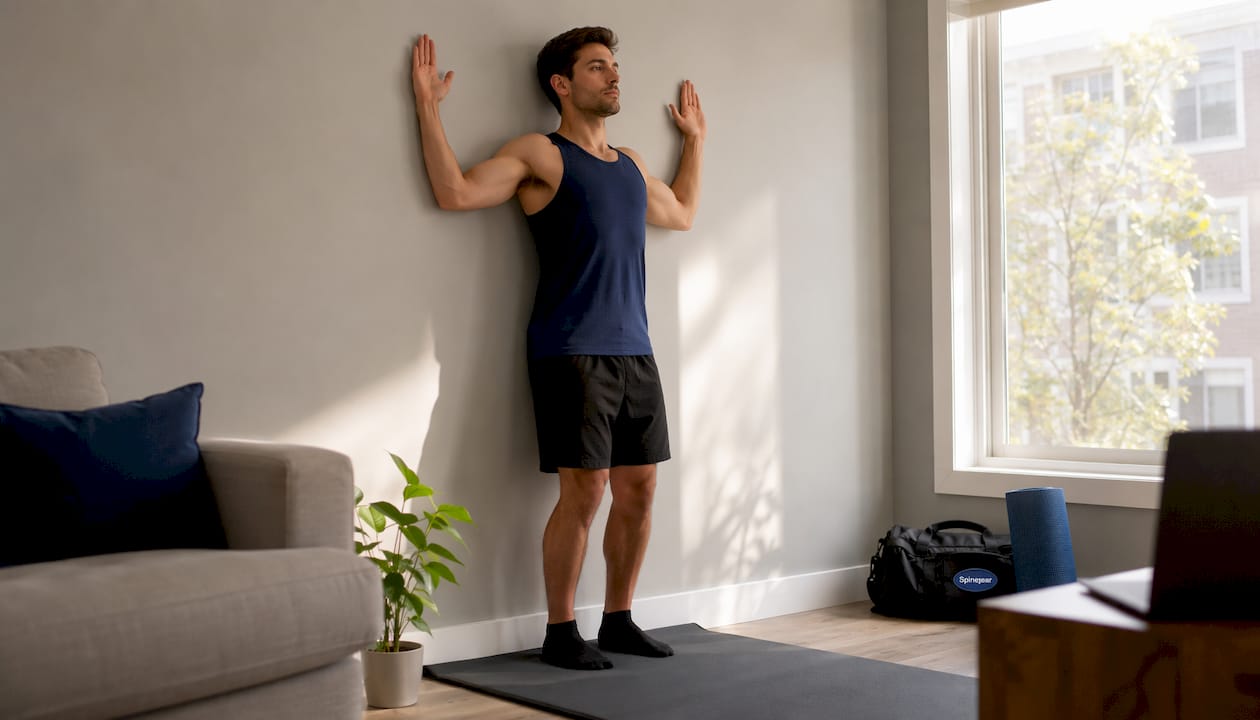
Wall angels: Stand with your back flat against a wall, feet slightly forward. Start with arms in a “W” shape and slide them upward to a “Y,” keeping contact with the wall throughout. Do 10 repetitions per session.
Shoulder blade squeeze: Sit tall and draw both shoulder blades together as if holding a tennis ball between them. Hold for 10 seconds, repeat 10 times. This rebuilds the mid-back strength that rounded posture erodes.
Door chest stretch: Place both hands on a doorframe just above head height, step one foot forward, and gently lunge through. Hold for 30 seconds. Tight chest muscles pull shoulders forward, so releasing them is as important as strengthening the back.
T stretch: Lie on your back, knees bent, arms extended to the sides with palms up. Hold for up to 10 minutes. It is particularly effective first thing in the morning.
Plank: Builds core and lower back strength, which supports upright posture throughout the day.
Daily posture habits that prevent shoulder rounding
Posture correction does not end when the exercise session does. The NHS recommends sitting with lumbar support and keeping shoulders gently back during computer use as baseline daily habits.
Raise your monitor to eye level so your head does not drop forward. Set a reminder every 30–45 minutes to reset your posture: shoulders back, chest lifted, chin tucked slightly. Small, frequent corrections are more effective than one long correction attempt at the end of the day.
How to use posture correctors and shoulder supports correctly
Wearable devices work best as a complement to physiotherapy, not a replacement for it. Research shows short-term improvements in postural alignment and body awareness, particularly with devices providing vibratory or visual biofeedback, though long-term evidence remains limited.
For shoulder braces, diagonal strap configuration matters. Biomechanical research confirms that diagonal tension increases posterior scapular tilting and activates the lower trapezius more effectively than parallel straps. When fitting a Spinegear shoulder support brace, adjust the straps so they pull the shoulders back and slightly down, not simply inward.
Wear the device for short, structured periods initially, typically 20–30 minutes during activities that trigger poor posture, such as desk work. Gradually increase duration as your awareness and muscle strength improve.
Common mistakes when trying to correct rounded shoulders at home
Relying on a brace without exercising. Muscles that are not actively strengthened will not hold correct alignment once the device is removed. A brace provides a cue; exercise provides the capacity.
Expecting fast results. Rounded shoulders develop over months or years. Structural improvement takes time. If exercises show no relief after two weeks, clinical assessment is advisable to rule out shoulder impingement or other underlying conditions.
Wearing a brace too tightly or for too long. Excessive compression can restrict circulation and cause discomfort. Start with shorter sessions and a comfortable fit.
Ignoring ergonomics. Exercises cannot outpace eight hours of poor sitting posture daily. Address the environment alongside the exercise routine.
Spinegear shoulder supports for posture correction at home
Spinegear offers a range of posture correctors and shoulder braces designed specifically for home use, built around the principle that wearable support works best alongside active exercise.

The Spinegear posture corrector back brace uses a diagonal strap design to cue scapular retraction during everyday activities. The rotator cuff shoulder support brace provides targeted compression and alignment support for those managing shoulder discomfort alongside posture work. Both are adjustable, comfortable for extended wear, and available with fast UK delivery. Browse the full back and posture support range at Spinegear to find the right device for your needs.
Key takeaways
Fixing rounded shoulders requires consistent exercise, correct wearable support, and daily posture habits working together over six to eight weeks.
| Point | Details |
|---|---|
| Exercise is the foundation | Wall angels, shoulder blade squeezes, and chest stretches rebuild the muscles that poor posture weakens. |
| Diagonal straps outperform parallel | Diagonal strap braces activate the lower trapezius more effectively, improving scapular alignment. |
| Devices complement, not replace | Using a brace without exercise risks dependency; strength gains require active muscle work. |
| Seek help when needed | No improvement after two weeks warrants clinical assessment to exclude underlying conditions. |
| Spinegear for home support | Spinegear’s posture correctors and shoulder braces are designed for home use with fast UK delivery. |