Check Your Blood Pressure at Home with a Spinegear Blood Pressure Monitor: A Complete UK Guide
How to Check Your Blood Pressure at Home with a Spinegear Blood Pressure Monitor
Monitoring your blood pressure at home is one of the easiest ways to stay informed about your heart health. Whether you have been advised by your GP to monitor your readings or simply want to keep track of your wellbeing, using a reliable home blood pressure monitor can provide valuable information between medical appointments.
Spinegear blood pressure monitors are designed to make home monitoring simple, accurate and comfortable. With easy-to-read displays, voice guidance and clinically validated measurement technology, you can check your blood pressure confidently from the comfort of your home.
Why Is It Important to Check Your Blood Pressure?
High blood pressure (hypertension) often develops without noticeable symptoms. Regular monitoring can help you:
- Detect high blood pressure early
- Track changes over time
- Support discussions with your GP or healthcare professional
- Monitor the effectiveness of lifestyle changes or prescribed medication
- Gain greater confidence in managing your cardiovascular health
Regular home monitoring should complement—not replace—professional medical advice.
Choosing the Right Spinegear Blood Pressure Monitor
Spinegear offers blood pressure monitors designed to suit different lifestyles and needs.
Spinegear Rechargeable Upper Arm Blood Pressure Monitor
Ideal for everyday home use, featuring:
- Adjustable cuff suitable for arm sizes up to 42 cm
- Large easy-to-read LCD display
- Three-colour blood pressure indicator
- Voice guidance for spoken results
- Two-user memory storage
- USB-C rechargeable battery
Best for: Daily home monitoring and users wanting maximum accuracy.
Spinegear Wrist Blood Pressure Monitor
Compact and lightweight, perfect for travel and convenience.
Features include:
- Portable design
- Voice announcements
- Easy one-touch operation
- Memory storage
- Positioning guidance for improved measurement consistency
Best for: Travelling, work or occasional blood pressure checks.
How to Check Your Blood Pressure Correctly at Home
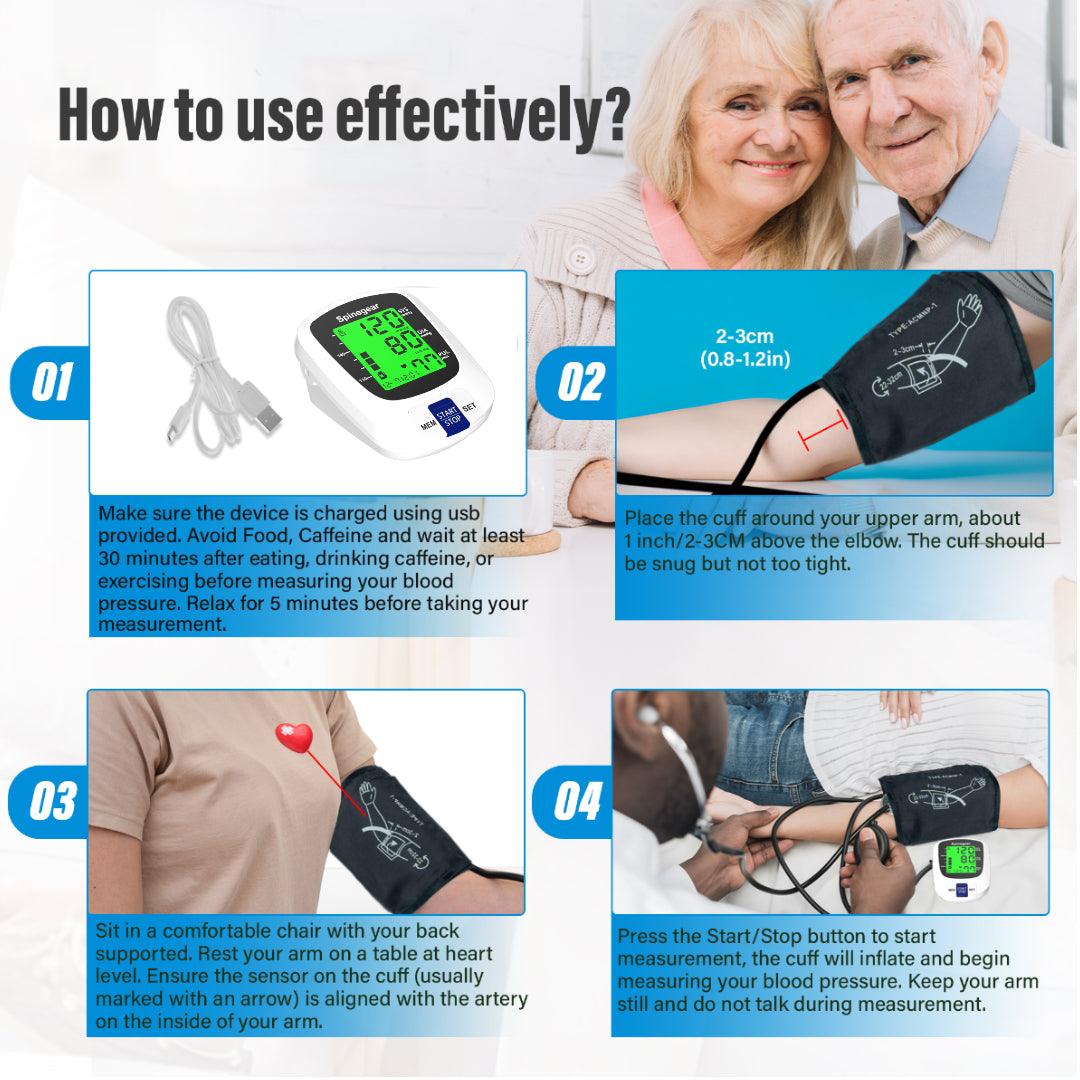
Following the correct technique helps improve the consistency of your readings. The following steps are based on commonly recommended NHS home monitoring practices.
Step 1: Prepare Before Taking a Reading
Before measuring your blood pressure:
- Rest quietly for at least 5 minutes
- Avoid caffeine for 30 minutes
- Avoid smoking for 30 minutes
- Avoid vigorous exercise for 30 minutes
- Empty your bladder if necessary
- Remove tight clothing from your upper arm if using an upper arm monitor
Taking measurements under similar conditions each day provides more consistent results.
Step 2: Sit in the Correct Position
Proper posture makes a significant difference.
Make sure you:
- Sit upright with your back supported
- Keep both feet flat on the floor
- Avoid crossing your legs
- Support your arm comfortably on a table
- Keep the cuff positioned at heart level
- Stay relaxed throughout the measurement
Avoid talking, moving or using your phone during the reading.
Step 3: Fit the Blood Pressure Cuff Properly
For the Upper Arm Monitor
- Wrap the cuff around your bare upper arm.
- Position it approximately 2–3 cm above your elbow.
- Ensure it fits snugly but not too tightly.
For the Wrist Monitor
- Place the monitor directly on your wrist.
- Raise your wrist so it is level with your heart.
- Keep your wrist steady until the measurement is complete.
Correct cuff positioning helps improve measurement accuracy.
Step 4: Start the Measurement
Simply:
- Press the Start button.
- Remain still and silent.
- Allow the cuff to inflate and deflate automatically.
- Wait for your blood pressure and pulse results to appear.
If your Spinegear monitor includes voice guidance, spoken prompts will guide you through each stage of the process.
Understanding Your Blood Pressure Reading
Your monitor displays three measurements:
Systolic Pressure
The top number measures the pressure when your heart beats.
Diastolic Pressure
The bottom number measures the pressure when your heart rests between beats.
Pulse Rate
Your heart rate in beats per minute.
Many Spinegear monitors also include a colour indicator to help you interpret your reading more easily.
- 🟢 Green – Within the normal range
- 🟡 Amber – Slightly elevated; continue monitoring
- 🔴 Red – Higher than normal; seek medical advice if readings remain consistently high
The colour indicator is a visual guide and should not replace advice from a healthcare professional.
Record Your Blood Pressure Readings
Keeping a record helps identify trends over time.
You can:
- Save readings using your monitor's built-in memory (where available)
- Record measurements in a blood pressure diary
- Share your readings with your GP, nurse or pharmacist during appointments
Taking readings at the same times each day often provides the most useful information.
Tips for More Accurate Home Blood Pressure Monitoring
For the most reliable readings:
- Measure at the same time each day
- Use the same arm for every reading
- Take two readings one minute apart
- Record both results
- Replace batteries or recharge your monitor regularly
- Keep your monitor clean and stored safely
Consistency is often more important than a single reading.
Why Choose a Spinegear Blood Pressure Monitor?
Spinegear blood pressure monitors are designed to make home monitoring straightforward for everyday users.
Benefits include:
- Clinically validated measurement technology
- Large, easy-to-read display
- Voice guidance on selected models
- Comfortable adjustable cuffs
- Memory storage for multiple users
- Rechargeable options available
- Simple one-touch operation
- Suitable for regular home monitoring
Whether you're monitoring your blood pressure daily or occasionally, Spinegear helps make the process simple and convenient.
Frequently Asked Questions
How often should I check my blood pressure at home?
Your GP or healthcare professional may recommend a schedule based on your individual circumstances. Many people take readings once in the morning and once in the evening over several consecutive days.
Is an upper arm blood pressure monitor more accurate?
Upper arm monitors are generally recommended for routine home monitoring when used correctly. Wrist monitors can also provide reliable readings when positioned accurately at heart level and used according to the manufacturer's instructions.
What should I do if I get a high reading?
Remain calm and wait a few minutes before taking another reading. If your readings remain consistently high or you feel unwell, seek advice from your GP or appropriate healthcare service.
Can I use my monitor every day?
Yes. Home blood pressure monitors are designed for regular use. Following a consistent routine can help provide more meaningful information over time.
Take Control of Your Heart Health
Checking your blood pressure at home is a simple habit that can help you better understand your cardiovascular health. By following correct measuring techniques and using a reliable Spinegear blood pressure monitor, you can take readings with confidence and share useful information with your healthcare professional when needed.
Whether you choose the Spinegear Rechargeable Upper Arm Blood Pressure Monitor or the Spinegear Wrist Blood Pressure Monitor, you'll benefit from straightforward operation, clear results and features designed to support accurate home monitoring.
Medical Disclaimer
This article is for educational purposes only and should not be considered medical advice. Always consult a qualified healthcare professional regarding concerns about your blood pressure or overall health. Home blood pressure monitors should be used alongside—not instead of—professional medical care.